Introduction
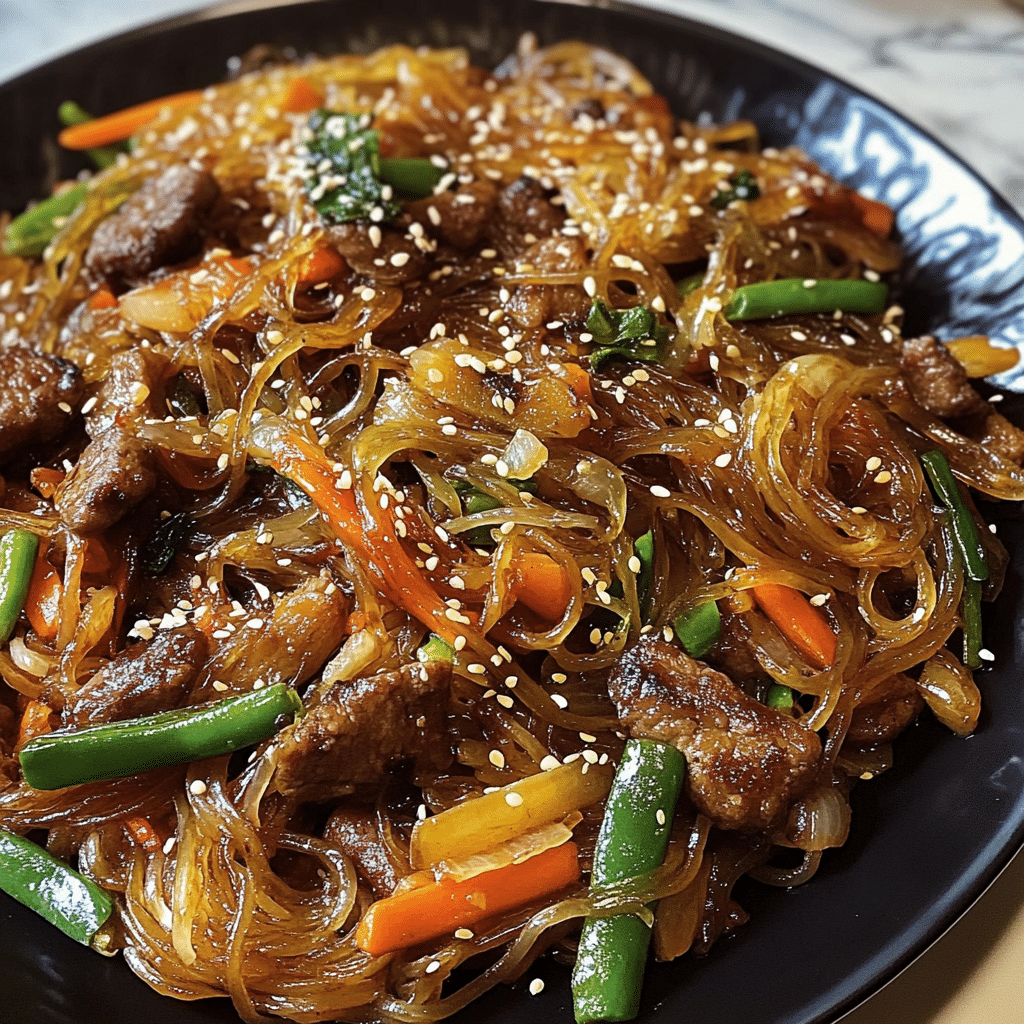
There’s something absolutely irresistible about Japchae. It’s one of those dishes that’s perfect for any occasion, whether you’re serving it at a family gathering, a holiday feast, or just a cozy weeknight dinner. Japchae, or Korean stir-fried glass noodles, is a vibrant, flavorful dish made with chewy sweet potato noodles, stir-fried vegetables, and a savory-sweet sauce that brings everything together. It’s a dish that’s full of texture, color, and so much umami, you’ll want to make it over and over again.
What makes Japchae so special is the combination of flavors and textures. The noodles are perfectly chewy, the vegetables provide crunch and freshness, and the meat (if you choose to include it) adds richness. The sauce, made from soy sauce, sesame oil, sugar, and garlic, creates a glaze that coats everything in a savory-sweet goodness. The dish can be served warm or cold, making it versatile for any season.
I first fell in love with Japchae during a visit to a Korean restaurant with friends. We were looking for something light yet satisfying, and Japchae caught our attention on the menu. The moment I tasted it, I knew I had to recreate it at home. I’ve been making it for family gatherings ever since, and it’s become a staple in my kitchen. It’s one of those dishes that’s guaranteed to impress everyone, no matter how picky they are.
Why You’ll Love This Recipe
Here are just a few reasons why this Japchae recipe should be on your must-try list:
- Easy to make: While it may look like a complex dish, Japchae is surprisingly simple to make with just a few ingredients.
- Customizable: You can easily adjust the vegetables, meat, or seasonings to suit your tastes.
- Flavor-packed: The sweet and savory sauce coats the noodles and veggies in a way that’s completely addictive. Every bite is bursting with flavor.
- Perfect for meal prep: Japchae holds up really well in the fridge, so it’s great for leftovers or meal prepping ahead of time.
- Family-friendly: Kids and adults alike will enjoy the combination of chewy noodles and fresh vegetables, and the subtle sweetness of the sauce makes it a hit with everyone.
Preparation Time and Servings
- Total Time: 30-40 minutes
- Servings: 4-6
- Calories per serving: 350
- Protein: 12g
- Carbs: 50g
Ingredients
For this recipe, you’ll need:
- 8 oz (225g) sweet potato noodles (also known as glass noodles or dangmyeon)
- 2 tablespoons sesame oil (for stir-frying)
- 1 tablespoon vegetable oil (for stir-frying)
- 1 small onion, thinly sliced
- 1 bell pepper, thinly sliced
- 1 large carrot, julienned
- 2 cups spinach (or substitute with kale or bok choy)
- 1/2 cup shiitake mushrooms, thinly sliced
- 1/2 cup zucchini, julienned
- 1/2 lb (225g) beef (or chicken), thinly sliced
- 2 cloves garlic, minced
sauce:
- 3 tablespoons soy sauce
- 2 tablespoons sesame oil
- 1 tablespoon sugar
- 1 tablespoon rice vinegar
- 1 teaspoon garlic, minced
- 1/2 teaspoon black pepper
- 1 tablespoon toasted sesame seeds (optional, for garnish)
Step-by-Step Instructions
Step 1: Prepare the Noodles
Start by boiling water in a large pot. Once the water is boiling, add your sweet potato noodles (dangmyeon). These noodles are a little different from your typical pasta—don’t overcook them! Boil them for 6-7 minutes, or until they’re soft but still chewy. Drain the noodles and rinse them under cold water to stop the cooking process. Set them aside.
Step 2: Prepare the Vegetables and Protein
While the noodles are cooking, you can prep your vegetables and protein. First, thinly slice your onions, bell peppers, carrots, zucchini, and mushrooms. If you’re using spinach, wash and drain it well. For the protein, slice your beef or chicken into thin strips against the grain—this ensures a tender texture. If you’re not a fan of meat, you can skip it entirely or swap it out for tofu for a vegetarian version.
Step 3: Make the Sauce
In a small bowl, whisk together the soy sauce, sesame oil, sugar, rice vinegar, minced garlic, and black pepper. The sugar in the sauce will balance out the saltiness of the soy sauce, creating that perfect sweet-savory combo. Set the sauce aside.
Step 4: Stir-fry the Vegetables and Protein
Heat a large pan or wok over medium-high heat. Add a tablespoon of vegetable oil and sesame oil to the pan. Once hot, add the sliced onion, bell pepper, carrot, zucchini, and mushrooms. Stir-fry the vegetables for about 3-4 minutes, until they’re slightly tender but still have some crunch. Add the garlic and stir for another minute until fragrant.
Next, add your protein to the pan and cook until it’s fully cooked through (around 5-6 minutes). If you’re using beef, it should brown and cook quickly. If you’re using chicken, make sure it reaches an internal temperature of 165°F.
Step 5: Combine the Noodles and Vegetables
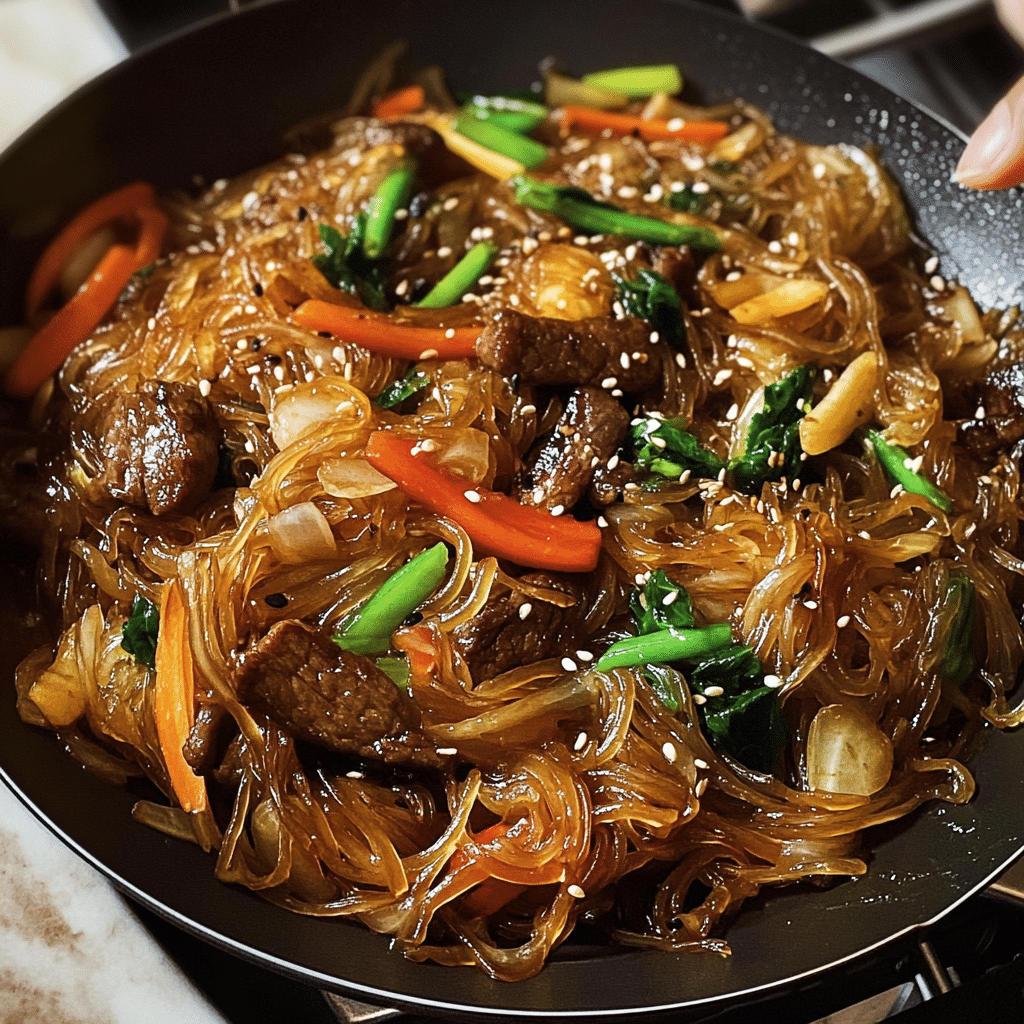
Now, it’s time to bring everything together! Add the cooked noodles to the pan with the vegetables and protein. Pour the sauce over everything, and toss gently to combine. Use tongs or chopsticks to mix everything together so the sauce coats all the noodles and veggies. Stir-fry for another 2-3 minutes to let the flavors meld together.
Step 6: Serve and Enjoy
Once everything is combined, remove the pan from the heat. Serve your Japchae hot or at room temperature. Garnish with toasted sesame seeds for extra crunch and flavor. Enjoy the sweet and savory flavors in every bite!
How to Serve
- Serve Japchae as a main dish on its own or as a side dish to accompany Korean BBQ, fried chicken, or any Asian-inspired meal.
- Pair with a simple cucumber kimchi or a light miso soup for a complete meal.
- For a lighter twist, serve it chilled as a salad-style dish during warm weather.
Additional Tips
Here are some tips to ensure your Japchae comes out perfectly every time:
- Don’t overcook the noodles: Sweet potato noodles can become too soft and mushy if you cook them too long. Keep an eye on them and test them for doneness after 6-7 minutes.
- Use a wok or large pan: Japchae needs room to toss everything around, so a wok or large skillet is the best choice.
- Customize your vegetables: Japchae is super versatile, so feel free to add your favorite veggies! Broccoli, cabbage, or even corn can be great additions.
- For a bit of heat: Add a dash of gochujang (Korean chili paste) to the sauce for a spicy kick.
- Meal prep: Japchae makes great leftovers and even tastes better the next day! Store any extras in an airtight container in the fridge for up to 3 days.
Recipe Variations
- Vegetarian Option: Swap the beef or chicken with tofu for a vegetarian-friendly version. Use extra mushrooms or add some tempeh for protein.
- Gluten-Free: Make sure to use gluten-free soy sauce (tamari) if you’re avoiding gluten.
- Spicy Japchae: Add some gochujang to the sauce or sprinkle red pepper flakes on top before serving for a spicy twist.
- Add nuts: For a crunch factor, throw in some toasted pine nuts or walnuts to the finished dish.
- Korean-Style Meatballs: Add some Korean-style meatballs (made with ground beef or pork) to take this dish to the next level.
Serving Suggestions
Japchae is a versatile dish that can be paired with many sides:
- Side Dishes: Serve with kimchi, steamed rice, or a fresh cucumber salad for a balanced meal.
- Beverages: A cold glass of iced tea or soju pairs wonderfully with Japchae. If you prefer non-alcoholic drinks, try serving it with a refreshing lemonade or iced barley tea.
- For Kids: Japchae is a great family-friendly meal. Serve it with soft rolls or simple buttered rice for younger kids who may prefer a milder version.
Freezing and Storage
- Storage: Store leftover Japchae in an airtight container in the fridge for up to 3 days.
- Freezing: Japchae can be frozen for up to 3 months. Place the cooled noodles in a freezer-safe container or bag. Reheat in a hot pan with a splash of water or sesame oil to prevent it from drying out.
Special Equipment
- Wok or Large Pan: A wok is ideal for stir-frying Japchae, but any large pan or skillet will do the job.
- Tongs or Chopsticks: Use tongs or chopsticks to toss the noodles and veggies together without breaking the noodles.
- Fine Mesh Strainer: If you’re draining excess water from the noodles or spinach, a fine mesh strainer will come in handy.
FAQ Section
- Can I use regular noodles?
Technically, yes! But if you want the authentic texture and flavor, I highly recommend using sweet potato glass noodles. Regular noodles won’t give you the same chewy bite that Japchae is known for. - Can I make Japchae ahead of time?
Absolutely! Japchae tastes even better the next day. You can prep the ingredients in advance and stir-fry everything when you’re ready to serve. - Can I make Japchae without meat?
Yes, just skip the meat and add more veggies or tofu for a delicious vegetarian version. - How can I make Japchae spicier?
Add gochujang (Korean chili paste) to the sauce, or sprinkle chili flakes on top for some extra heat. - Can I freeze Japchae?
Yes, Japchae freezes well! Make sure to store it in an airtight container and reheat it in a pan with a little sesame oil or water to bring it back to life.
Korean Japchae Recipe
- Total Time: 40 minutes
Ingredients
- 8 oz (225g) sweet potato noodles (also known as glass noodles or dangmyeon)
- 2 tablespoons sesame oil (for stir-frying)
- 1 tablespoon vegetable oil (for stir-frying)
- 1 small onion, thinly sliced
- 1 bell pepper, thinly sliced
- 1 large carrot, julienned
- 2 cups spinach (or substitute with kale or bok choy)
- 1/2 cup shiitake mushrooms, thinly sliced
- 1/2 cup zucchini, julienned
- 1/2 lb (225g) beef (or chicken), thinly sliced
- 2 cloves garlic, minced
For the sauce:
- 3 tablespoons soy sauce
- 2 tablespoons sesame oil
- 1 tablespoon sugar
- 1 tablespoon rice vinegar
- 1 teaspoon garlic, minced
- 1/2 teaspoon black pepper
- 1 tablespoon toasted sesame seeds (optional, for garnish)
Instructions
Step 1: Prepare the Noodles
Start by boiling water in a large pot. Once the water is boiling, add your sweet potato noodles (dangmyeon). These noodles are a little different from your typical pasta—don’t overcook them! Boil them for 6-7 minutes, or until they’re soft but still chewy. Drain the noodles and rinse them under cold water to stop the cooking process. Set them aside.
Step 2: Prepare the Vegetables and Protein
While the noodles are cooking, you can prep your vegetables and protein. First, thinly slice your onions, bell peppers, carrots, zucchini, and mushrooms. If you’re using spinach, wash and drain it well. For the protein, slice your beef or chicken into thin strips against the grain—this ensures a tender texture. If you’re not a fan of meat, you can skip it entirely or swap it out for tofu for a vegetarian version.
Step 3: Make the Sauce
In a small bowl, whisk together the soy sauce, sesame oil, sugar, rice vinegar, minced garlic, and black pepper. The sugar in the sauce will balance out the saltiness of the soy sauce, creating that perfect sweet-savory combo. Set the sauce aside.
Step 4: Stir-fry the Vegetables and Protein
Heat a large pan or wok over medium-high heat. Add a tablespoon of vegetable oil and sesame oil to the pan. Once hot, add the sliced onion, bell pepper, carrot, zucchini, and mushrooms. Stir-fry the vegetables for about 3-4 minutes, until they’re slightly tender but still have some crunch. Add the garlic and stir for another minute until fragrant.
Next, add your protein to the pan and cook until it’s fully cooked through (around 5-6 minutes). If you’re using beef, it should brown and cook quickly. If you’re using chicken, make sure it reaches an internal temperature of 165°F.
Step 5: Combine the Noodles and Vegetables
Now, it’s time to bring everything together! Add the cooked noodles to the pan with the vegetables and protein. Pour the sauce over everything, and toss gently to combine. Use tongs or chopsticks to mix everything together so the sauce coats all the noodles and veggies. Stir-fry for another 2-3 minutes to let the flavors meld together.
Step 6: Serve and Enjoy
Once everything is combined, remove the pan from the heat. Serve your Japchae hot or at room temperature. Garnish with toasted sesame seeds for extra crunch and flavor. Enjoy the sweet and savory flavors in every bite!
Nutrition
- Serving Size: 6
- Calories: 350
- Carbohydrates: 50g
- Protein: 12g
Conclusion
I hope you’re as excited to try this Japchae recipe as I am to share it with you. It’s one of those dishes that truly brings people together—it’s colorful, flavorful, and full of love. Don’t forget to snap a photo and tag me on Instagram; I can’t wait to see how your Japchae turns out!